
Google Ads Expert · Tennessee
Small Budget, Big Results: Hire a Google Ads Expert in Tennessee
If you are looking to hire a Google Ads Expert in Tennessee, you probably do not need more traffic for the sake of traffic. You need the right people to find your business, take action, and become real sales opportunities.
- Free waste & opportunity review
- You keep account ownership
- Direct access — no account managers

Tahmidur TanvirGoogle Ads Expert · PPC Consultant
$100K+/moAd spend managed
2X–7XROAS range on campaigns
Monthly ad spend managed
ROAS range across campaigns
You work directly with me
Account ownership stays yours
Verified by Google
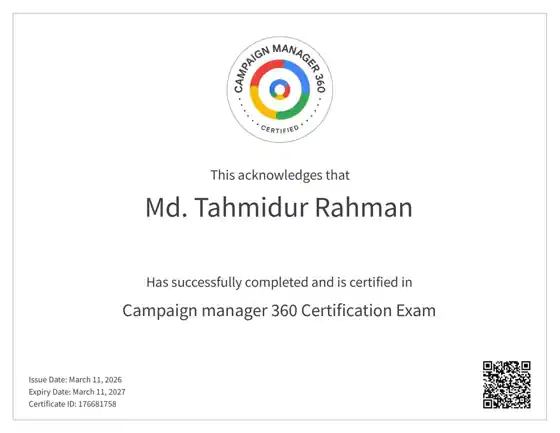
Google-Certified Google Ads Expert — 9 Verified Certifications
Anyone can call themselves a Google Ads expert. These certifications are issued by Google after passing its official exams, and each one can be checked with its certificate ID.

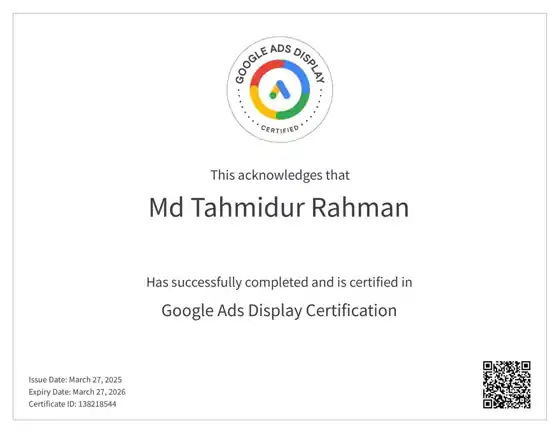





What Google’s Certifications Mean for Your Ad Spend
✓ Search: keyword strategy, bidding and ad copy that turns searches into leads
✓ AI-Powered Performance Ads: Performance Max and Smart Bidding set up with real conversion data
✓ Creative & Apps: ads and assets built to win clicks, calls and installs
✓ Campaign Manager 360: enterprise-level measurement and reporting


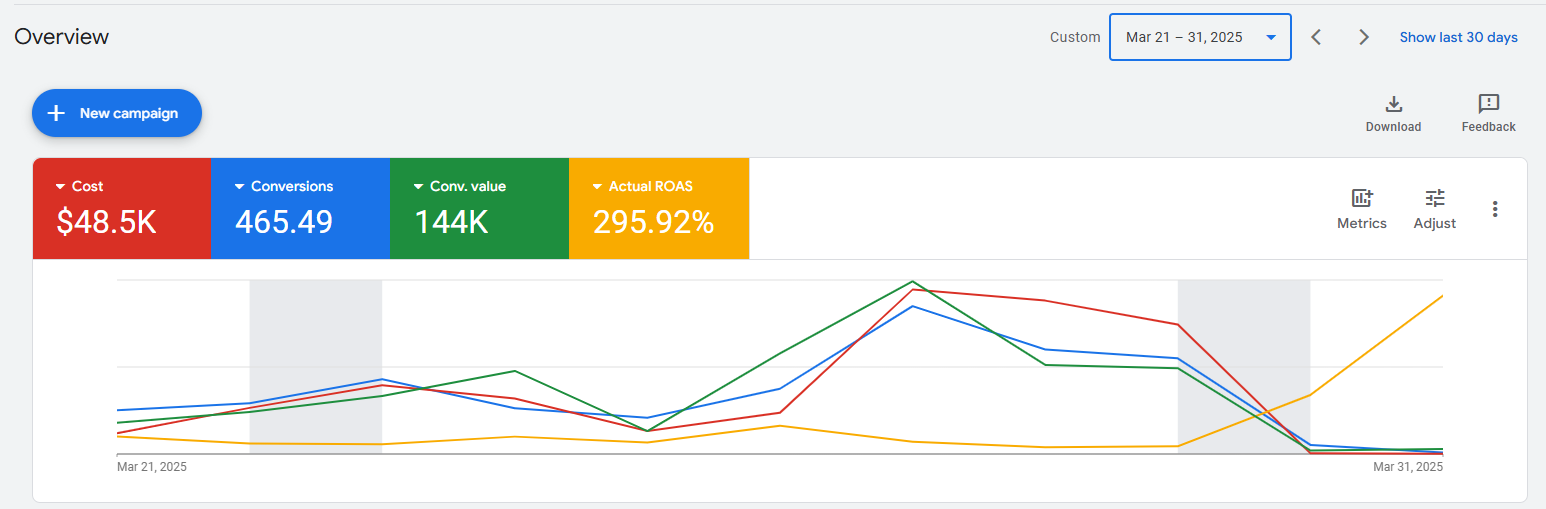
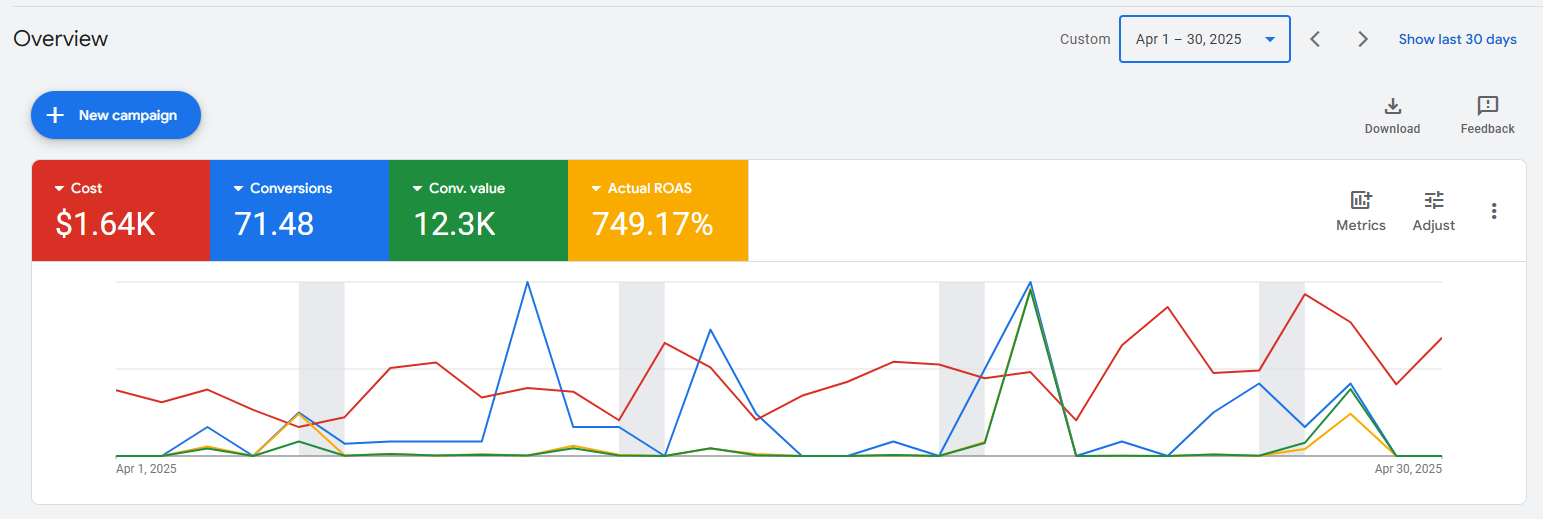
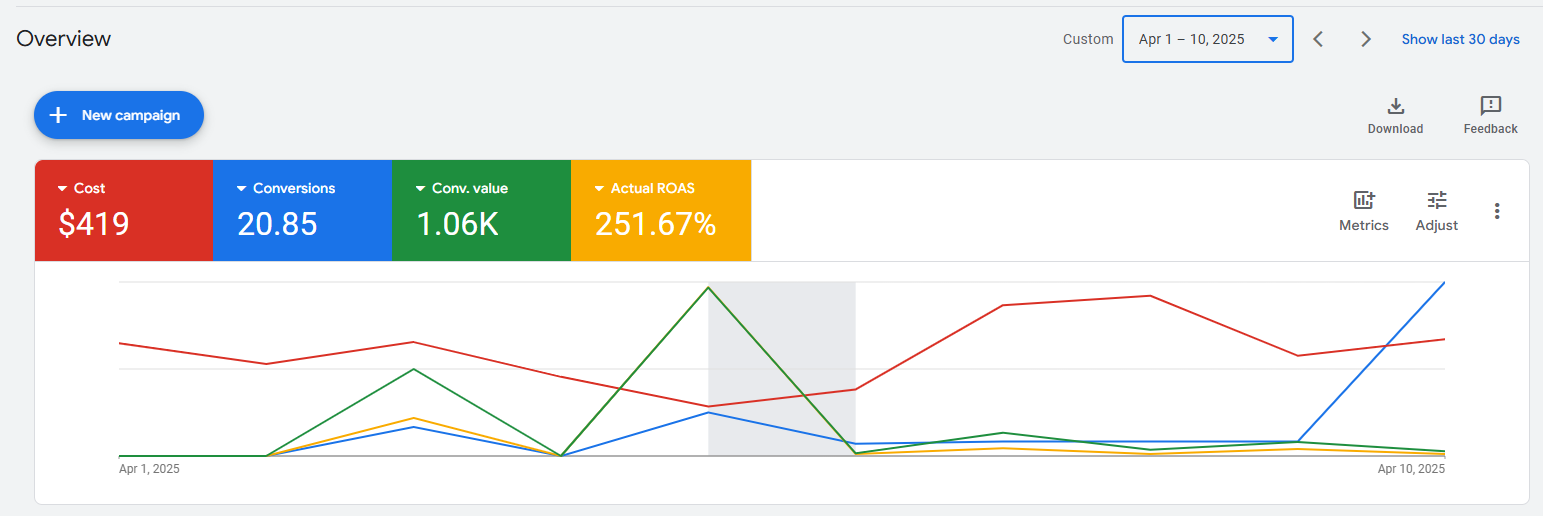
Real accounts, real numbers
What Fixing These Challenges Looks Like Inside Google Ads
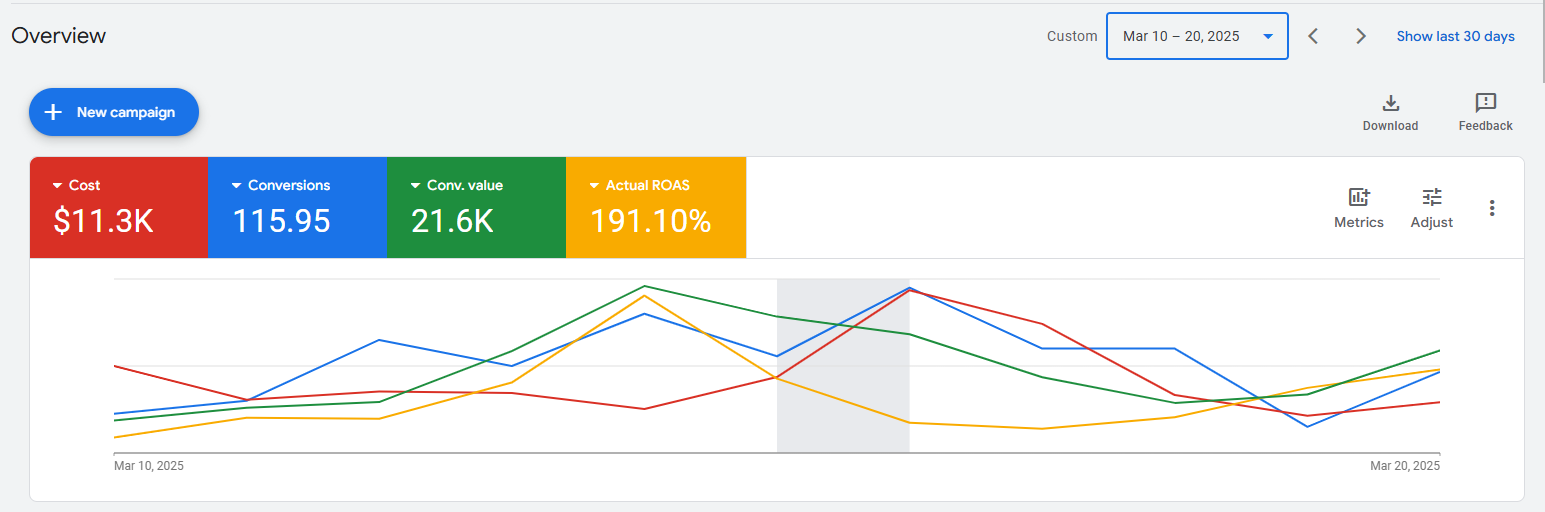
Live Google Ads dashboards from accounts I manage. Click any screenshot to enlarge.
Proof, not promises
Real Google Ads Results From Accounts I’ve Managed
Screenshots taken directly from Google Ads accounts I have worked on. Click any screenshot to see it full size.
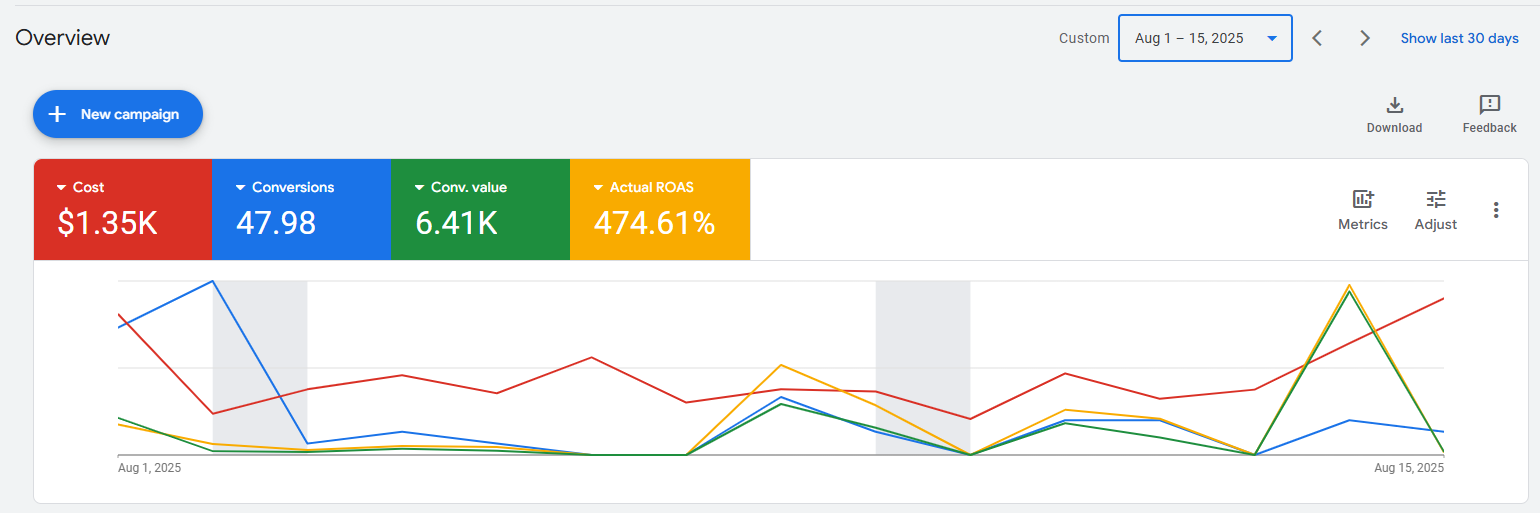

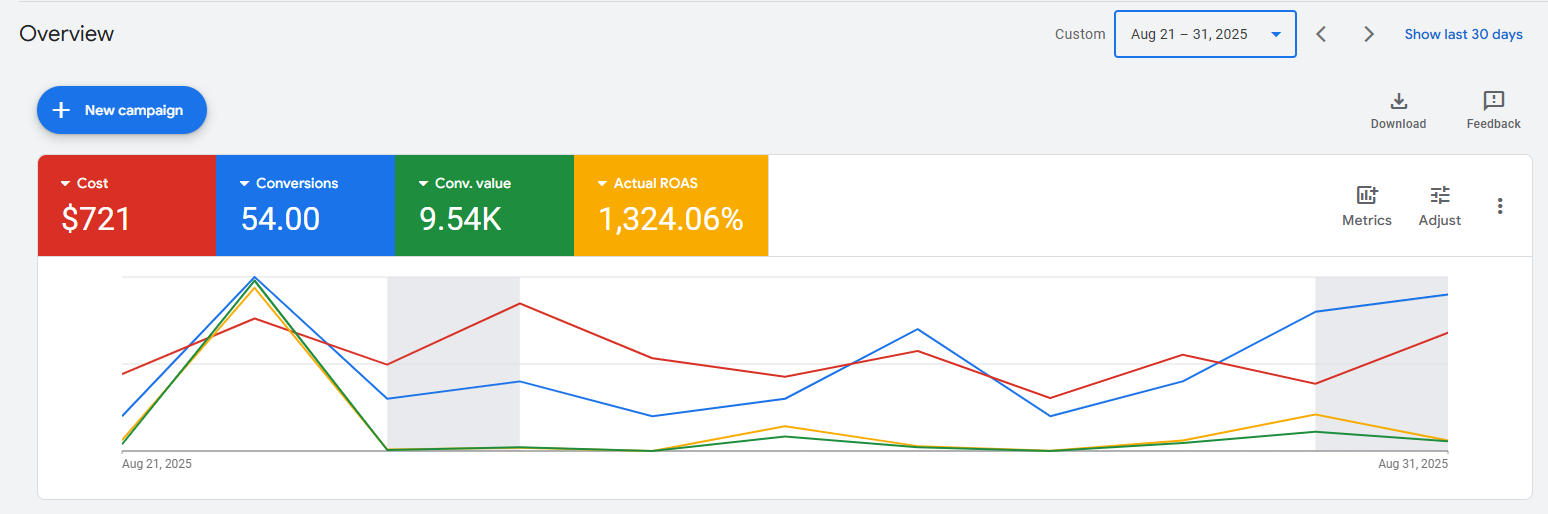
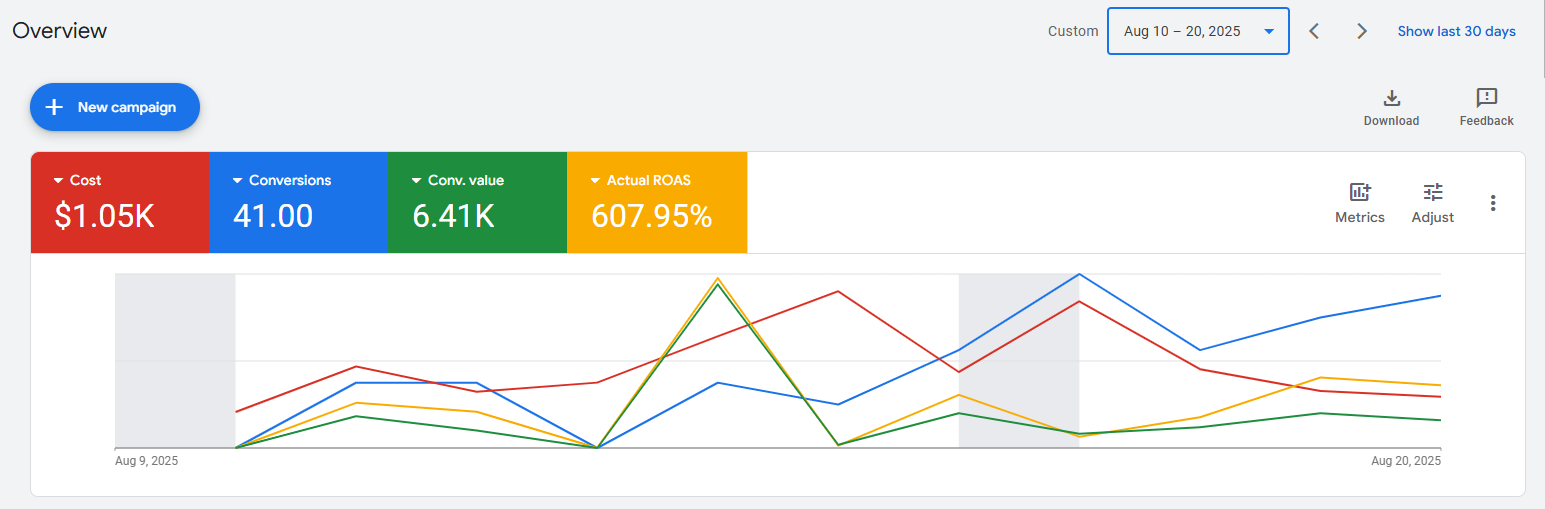
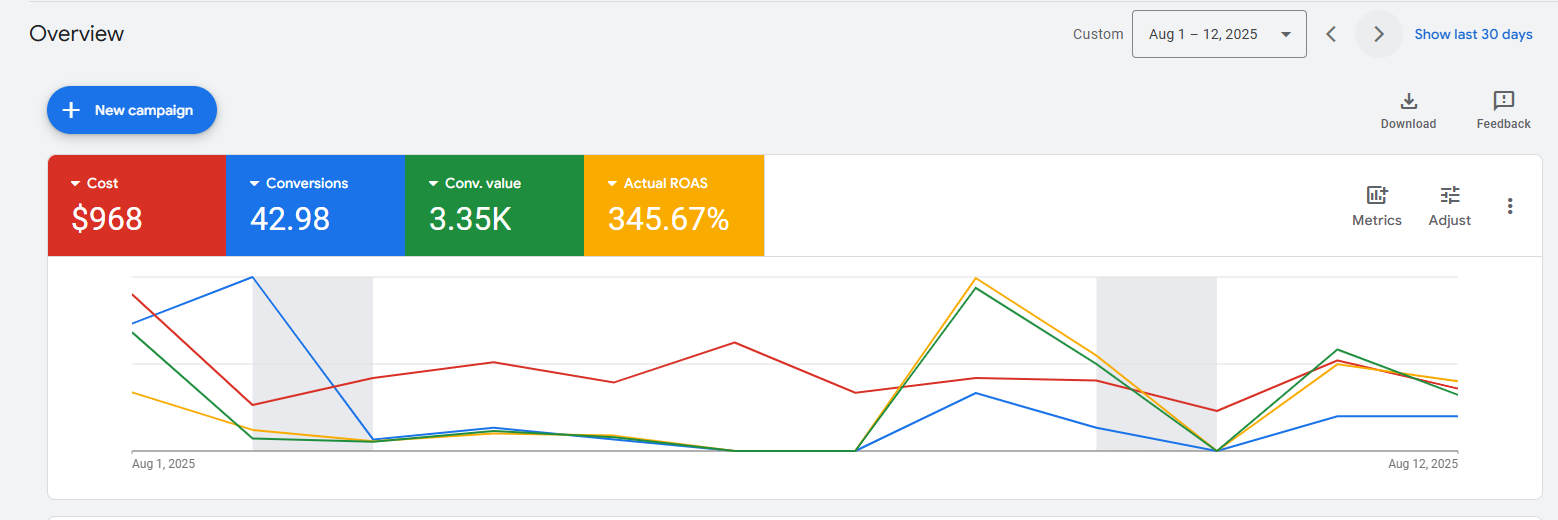
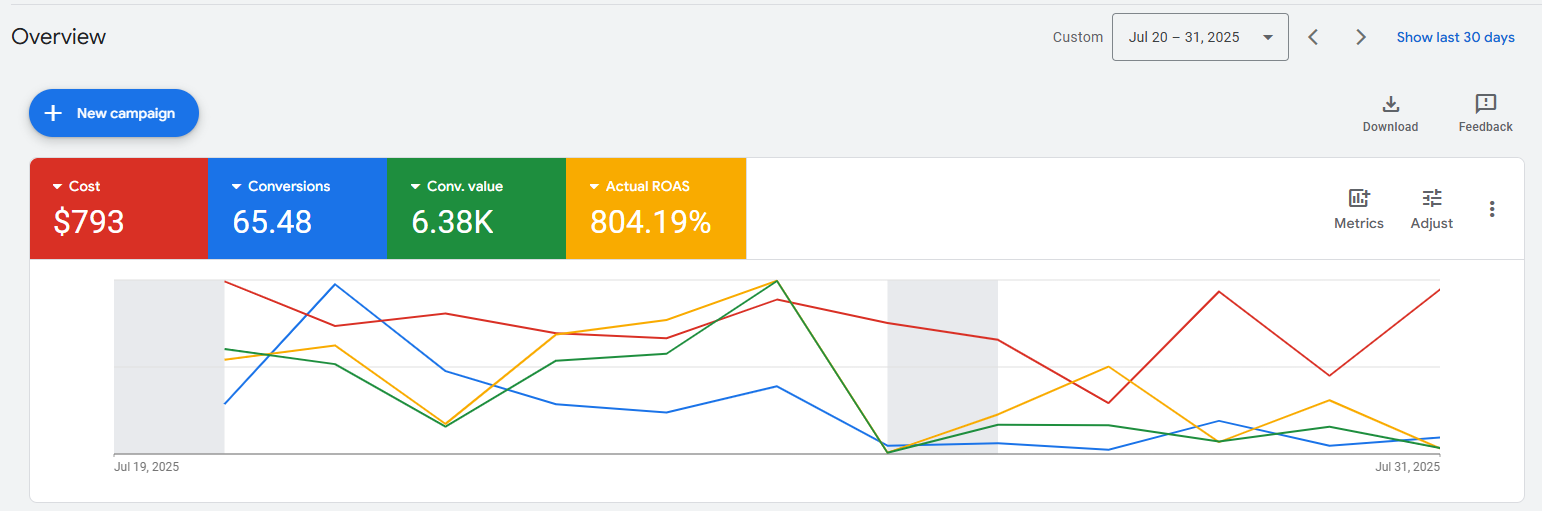
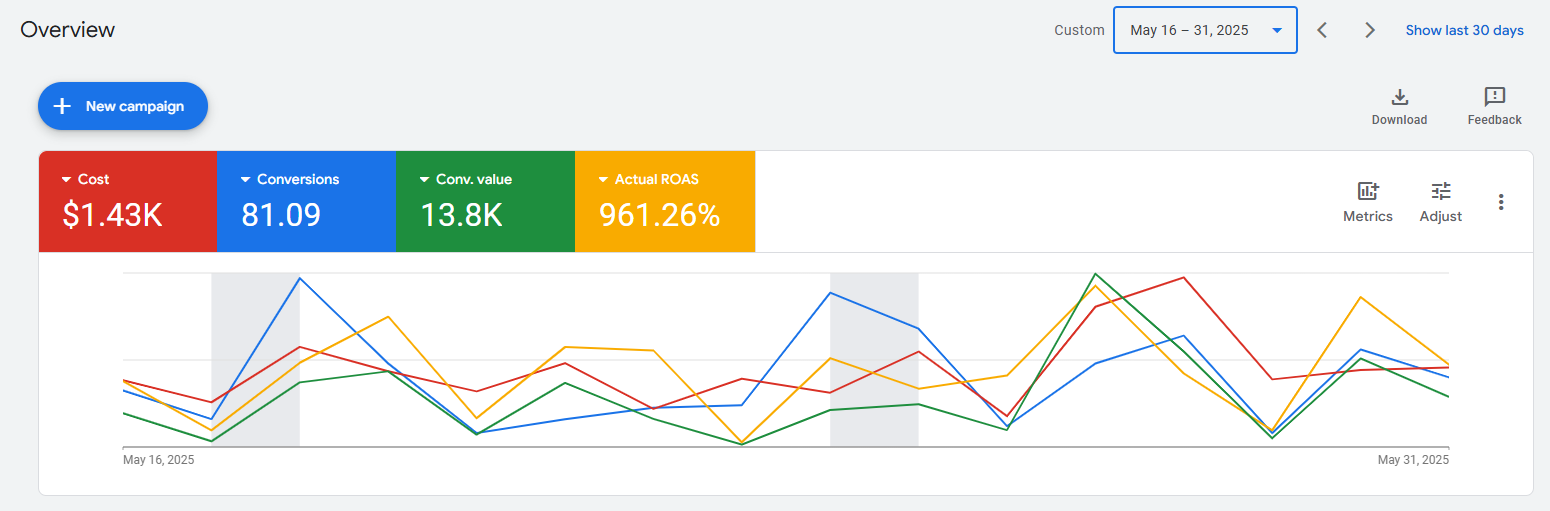
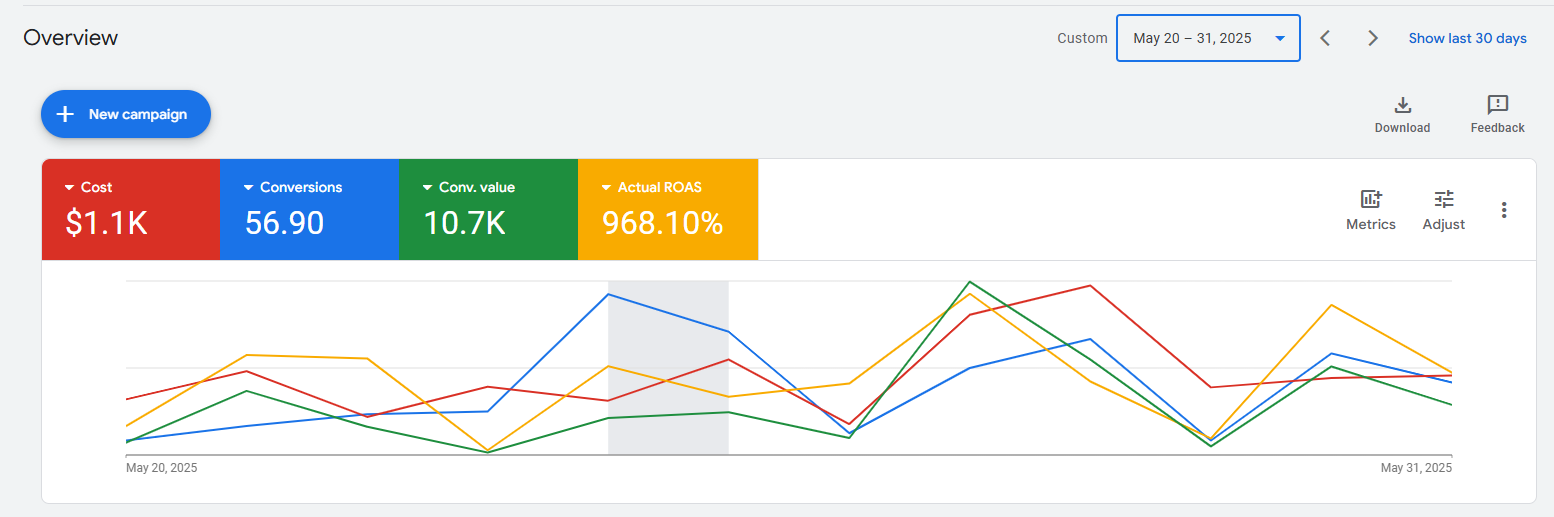
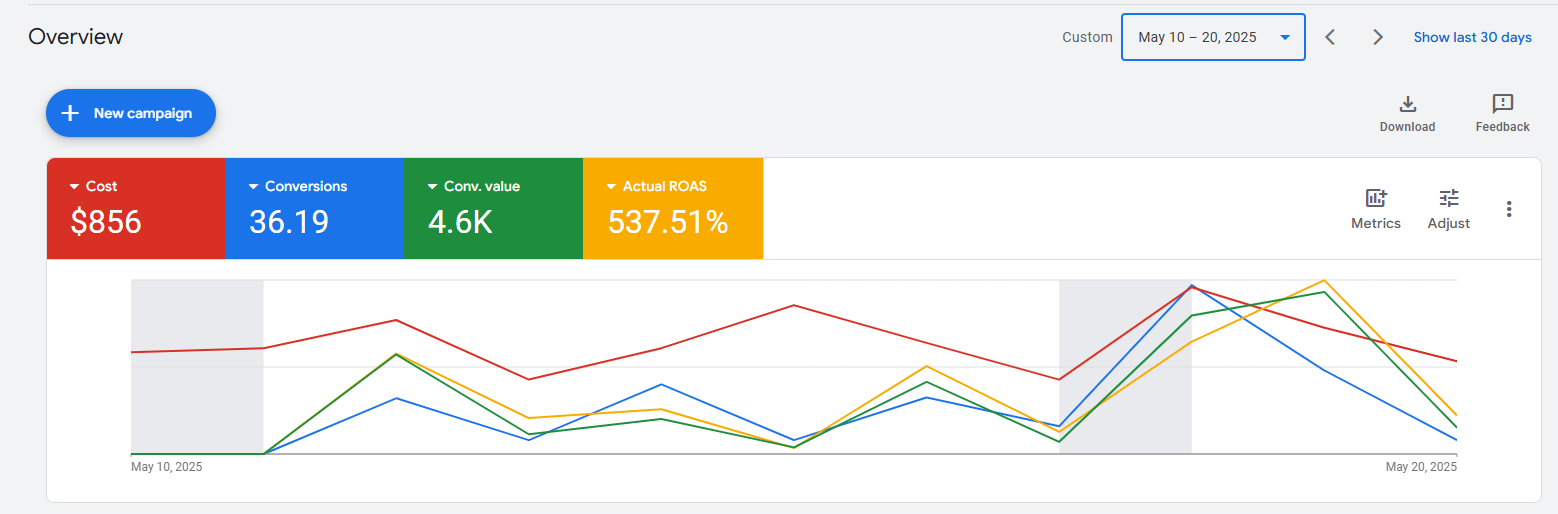

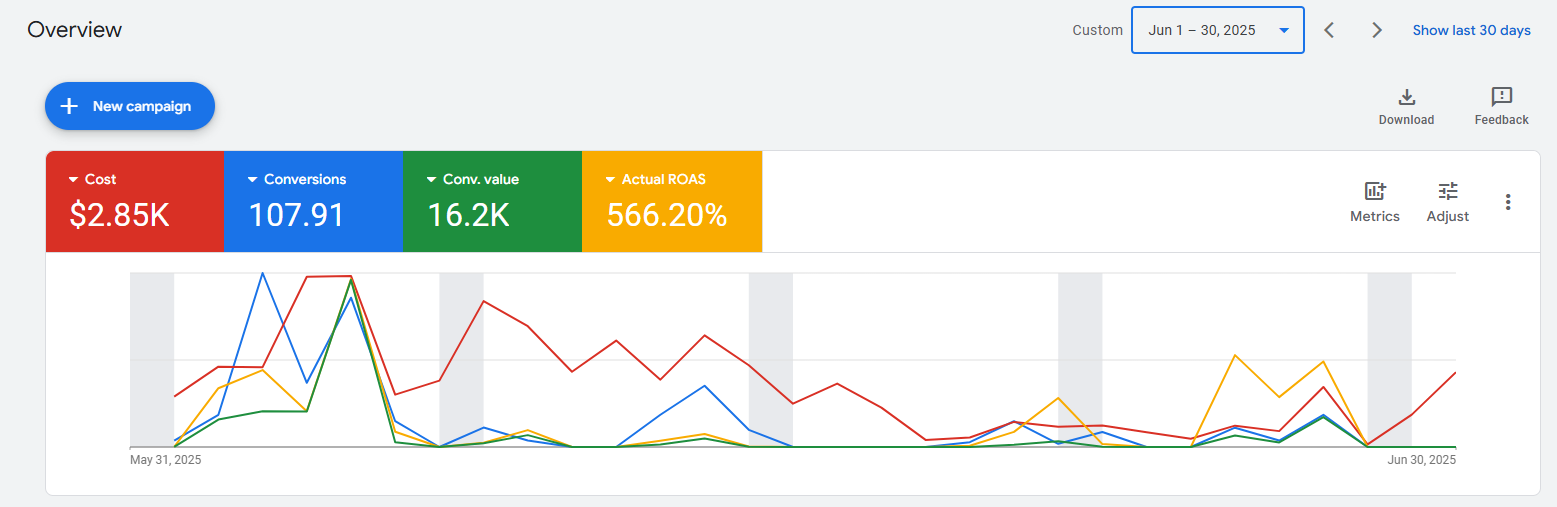

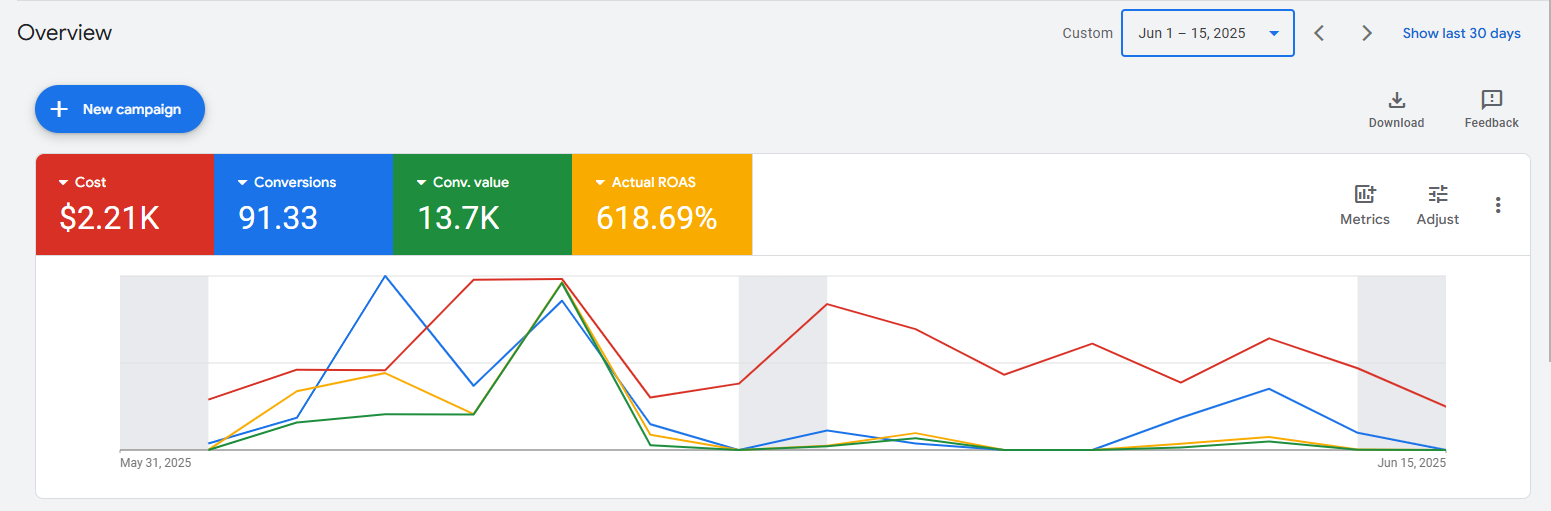

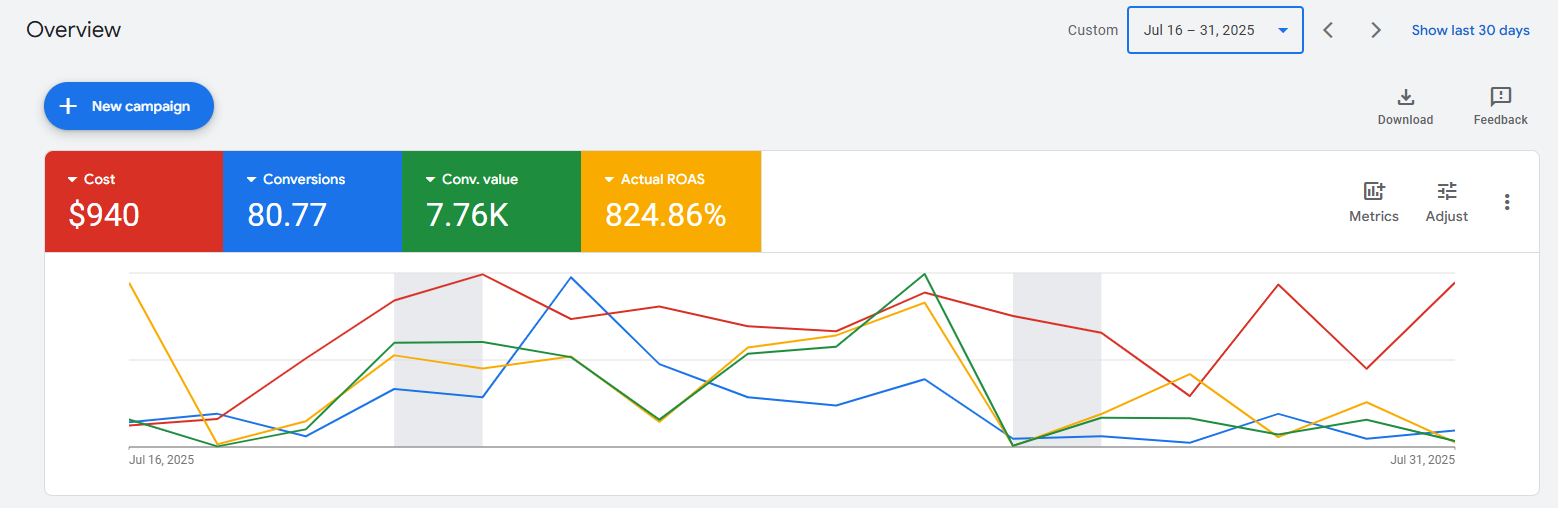
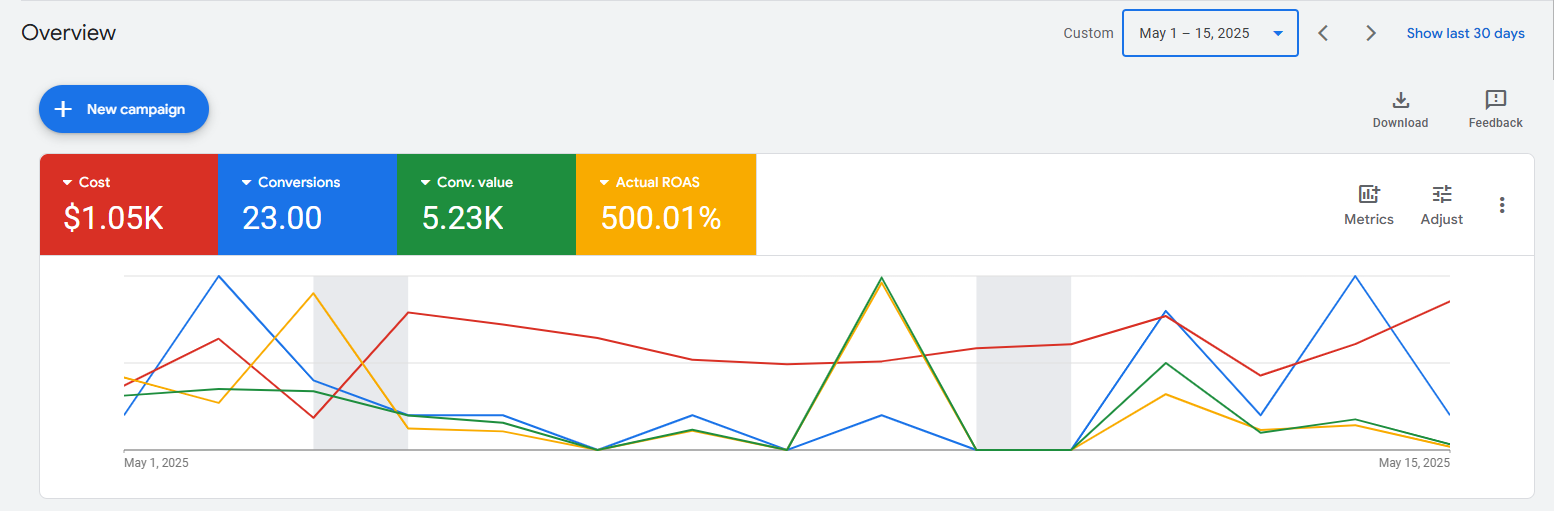
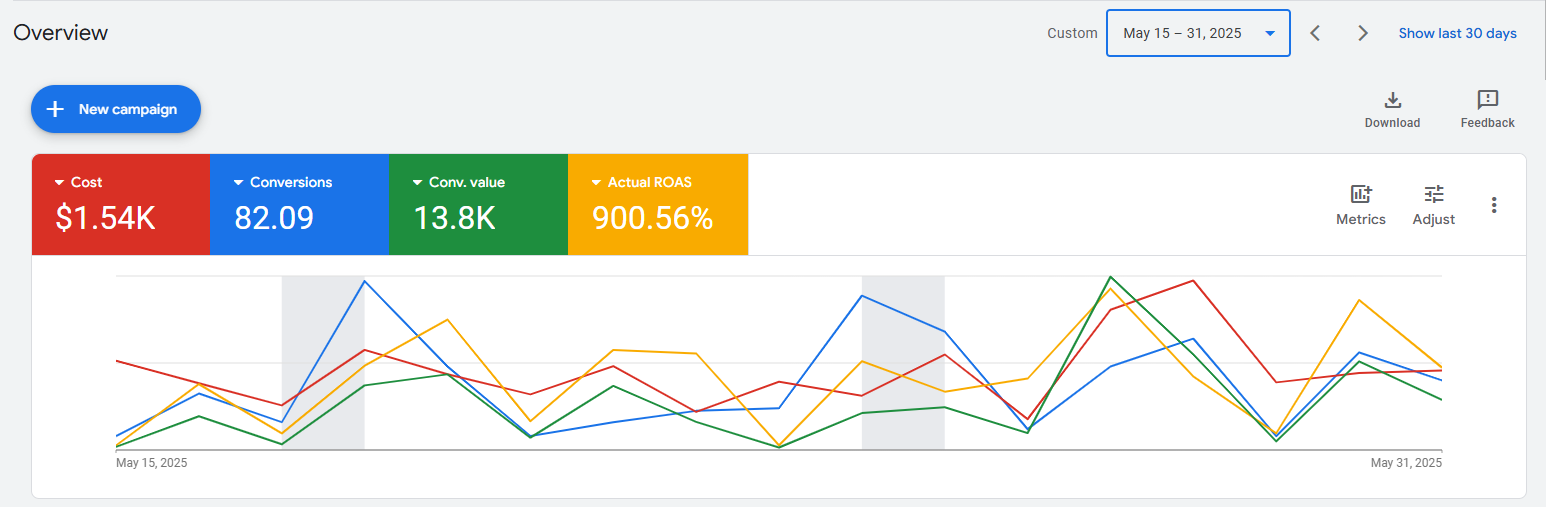
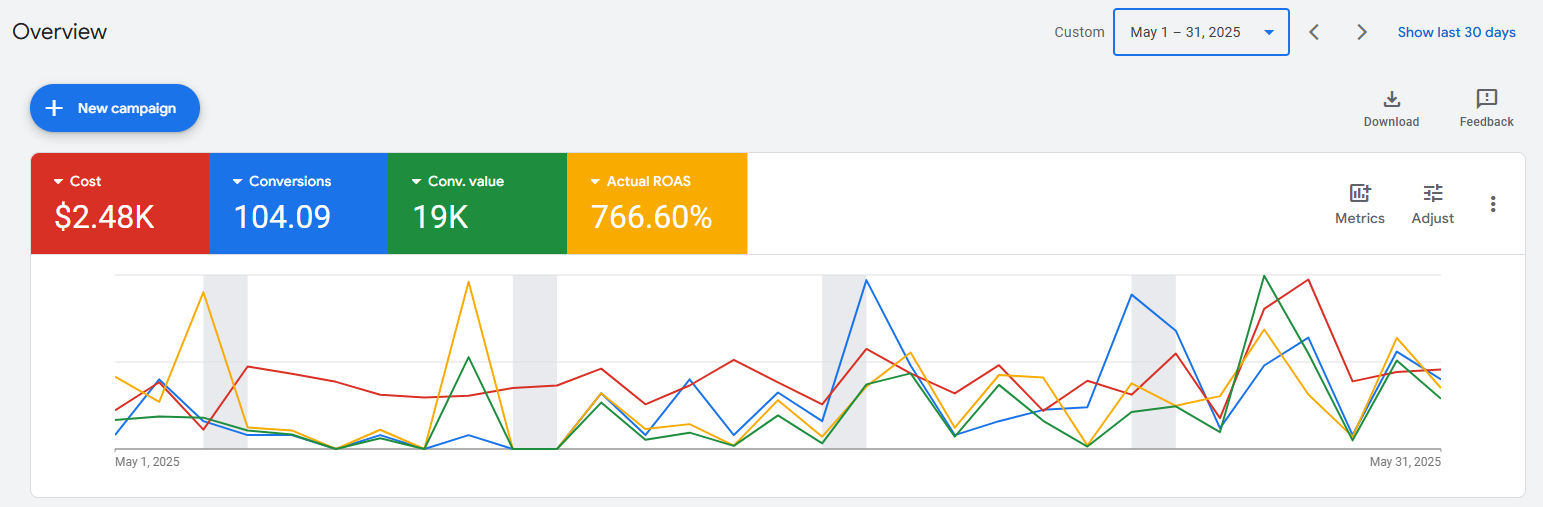

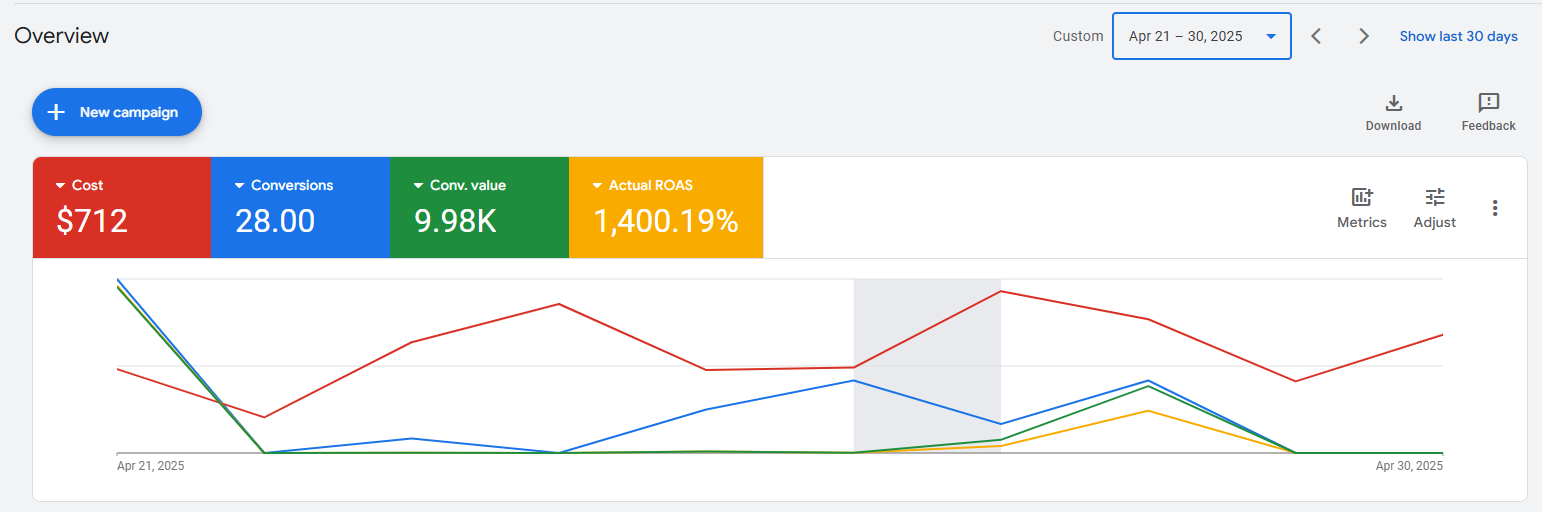

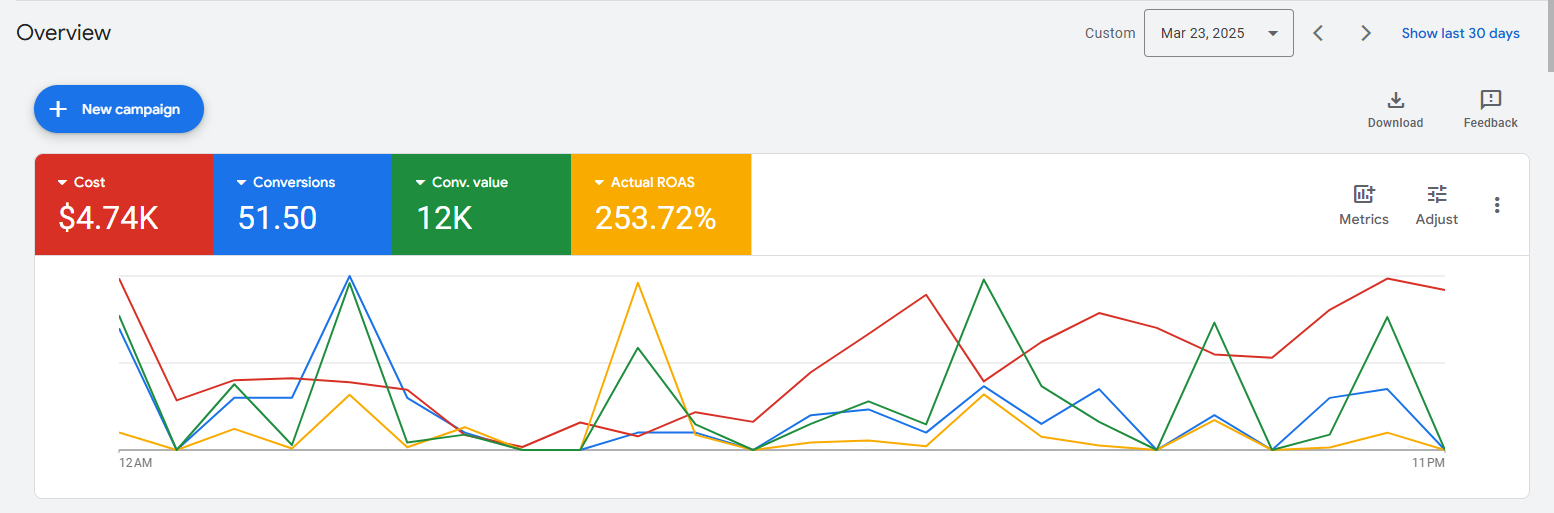
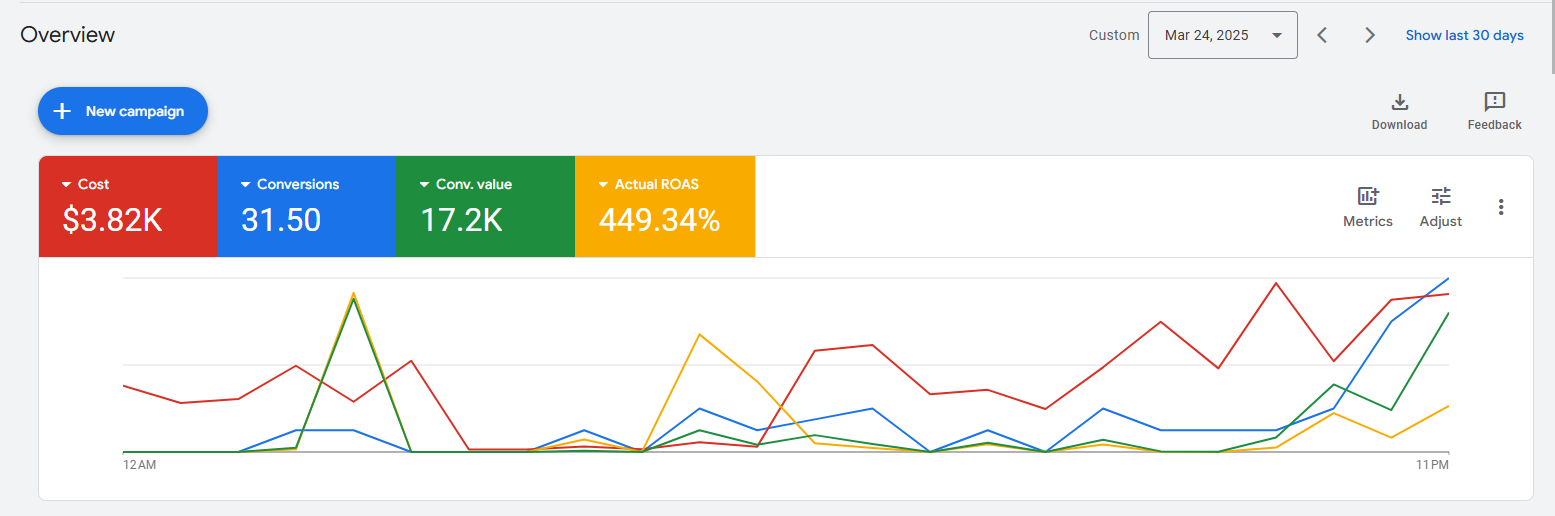
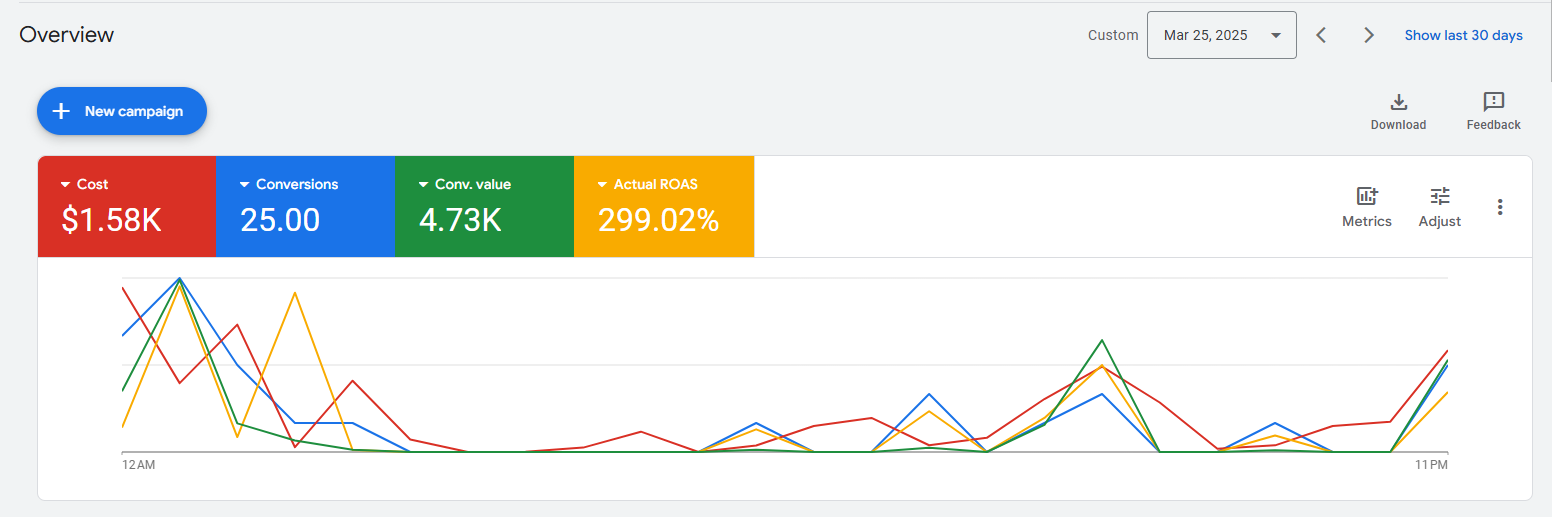

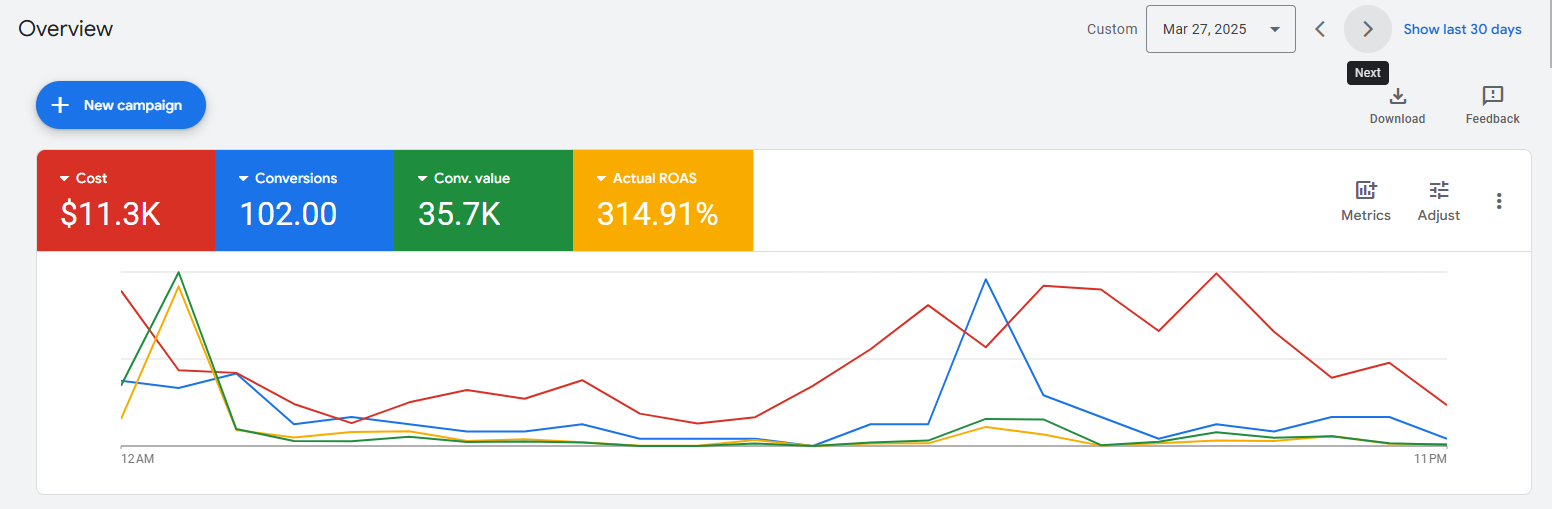

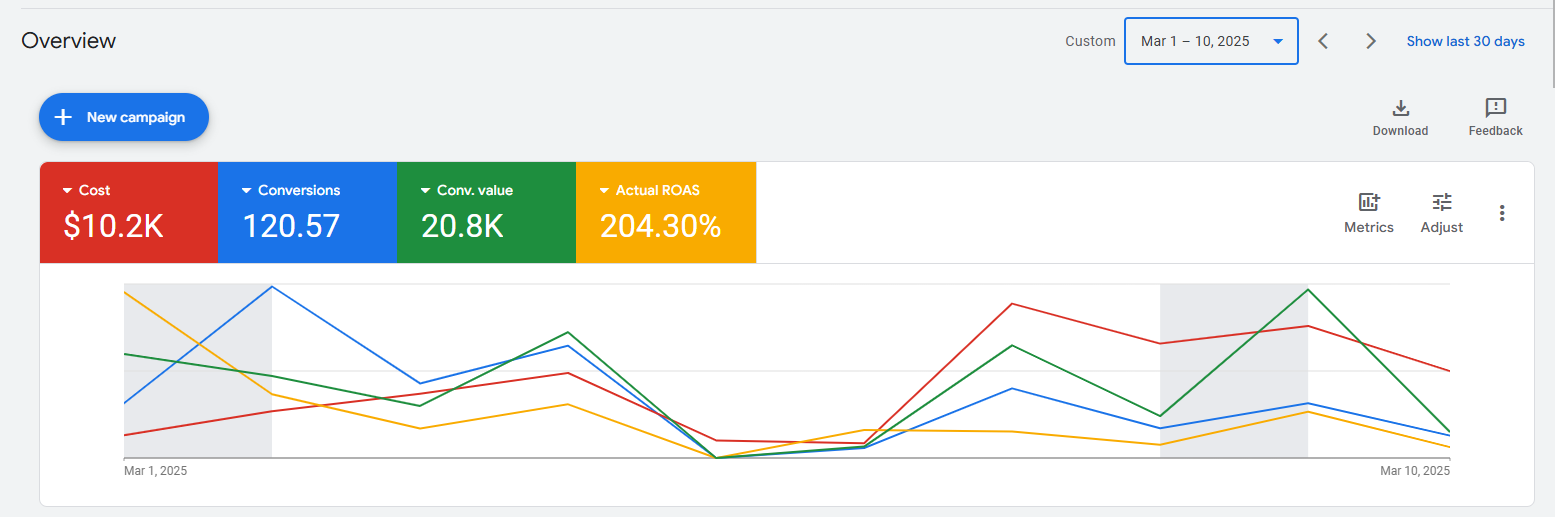

Results vary by industry, market, offer and budget. Past performance is not a guarantee of future results.
Case studies
How Client Ad Spend Turned Into Real Revenue
A closer look at three client campaigns: where they started, what I changed, and what the numbers looked like afterwards.
Coach · Online course
Ad spend
→
Revenue
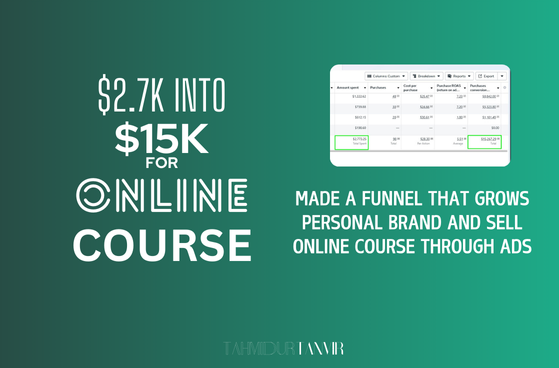
From $2.7K in Ad Spend to $15.2K in Course Sales
This coach needed to sell an online course and grow his personal brand. I built a conversion-focused funnel and ran strategic ads to it, turning a $2,773.25 investment into $15,267.29 in sales.
Non-profit · Fundraising
Ad spend
→
Revenue
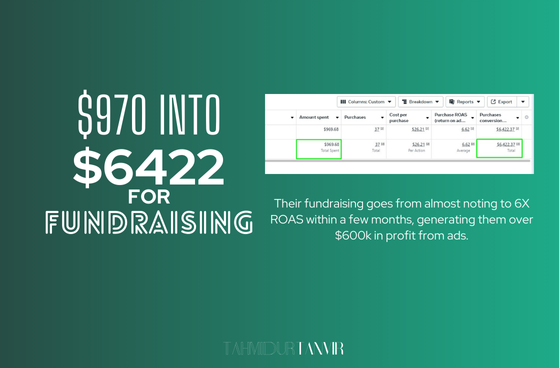
From Losing Money to a 6X Return on Fundraising Ads
This non-profit was losing money on its fundraising ads when they brought me in. In the first month, $970 in ad spend raised $6,422, and the wider fundraising effort went on to generate more than $600K that year.
High-ticket services
Ad spend
→
Revenue
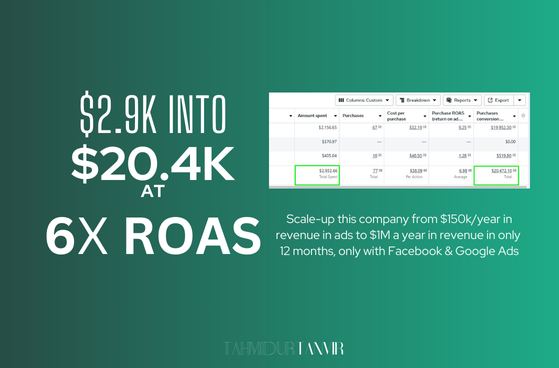
From 2X to 6X ROAS on High-Ticket Sales
This business sells high-ticket services and products. I rebuilt the ad strategy around stronger creatives and smarter retargeting, then tightened spend and targeting, turning $2.9K into $20,472.10 in revenue.
Local market
Tennessee Google Ads Market Overview
Advertising conditions are not identical across Tennessee. Businesses competing in a major metropolitan area can face a different paid-search environment from companies serving smaller cities, suburban markets, or rural areas. The strategy should reflect those differences rather than treating an entire state as one uniform advertising market.
What Makes the Tennessee Market Different?
Tennessee has about 7.32 million residents and has grown by roughly 400,000 people since 2020. The state divides naturally into three Grand Divisions: East Tennessee around Knoxville and Chattanooga, Middle Tennessee around Nashville, and West Tennessee around Memphis. Each has a distinct economy and market.
Nashville has become one of the fastest-growing metros in the country, driven by healthcare, music and entertainment, technology and corporate relocations. Memphis is a major logistics hub, while Knoxville and Chattanooga combine manufacturing, research and outdoor tourism.
Tennessee has no broad state income tax on wages, which has helped attract residents and businesses from higher-tax states, and many newcomers turn to Google to find every kind of local provider.
This page is not a claim that I run a local office in Tennessee. I work remotely.
What matters is that Nashville, Memphis and the rest of the state are planned as different markets instead of one blended campaign, so you can see what each area actually returns.
Large Metro Areas vs. Smaller Markets in Tennessee
Businesses operating in major metro areas often face greater advertiser density because more companies are competing for the same high-intent searches.
Smaller markets may have different challenges.
Search volume can be lower, service areas can be larger, and campaigns may need to balance efficient geographic coverage with enough search demand to produce useful data.
The correct strategy depends on the market.
That is why statewide Google Ads management should analyze performance geographically instead of assuming every city deserves the same investment.
What gets in the way
Google Ads Challenges Businesses Face in Tennessee
When I review Tennessee accounts, the same handful of problems tends to explain most of the wasted spend.
Competition Can Change Dramatically by Market
A home-service company in Nashville’s suburbs competes with a large and growing number of advertisers. The same company in rural West Tennessee or the Cumberland Plateau may face few competitors, but also much smaller search volume.
- Cost per click
- Search volume
- Impression share
- Lead costs
- Budget requirements
- Geographic strategy
A Statewide Target Can Be Too Broad
A company may technically serve all of Tennessee while still having areas where customers are more valuable, easier to reach, or operationally practical.
Campaigns can be segmented around:
- Counties
- Metropolitan areas
- Cities
- Service territories
- Branch locations
- Revenue potential
Seasonal Demand Can Change Search Behavior
Tennessee sees severe storms and tornadoes in spring and late fall, hot, humid summers that drive AC demand, and occasional ice storms in winter. The Smoky Mountains and Nashville attract heavy tourism, with peaks in summer and during fall foliage.
- Search volume
- Customer urgency
- Competition
- Conversion rates
- Required budgets
Local Search Intent Is Often Highly Commercial
“emergency plumber near me”
“roof repair Nashville”
“dentist in Memphis”
“business attorney Knoxville”
often reveal significantly stronger commercial intent than broad informational queries.
A local Google Ads campaign should be built around that distinction.
City by city
Google Ads Opportunities Across Major Markets in Tennessee
Four parts of Tennessee that show why one statewide campaign rarely fits every market:
Nashville & Middle Tennessee
The Nashville metro has roughly 2.1 million residents and continues to grow quickly, with suburbs such as Franklin, Murfreesboro, Hendersonville and Spring Hill expanding rapidly.
Competition is intense in home services, legal, real estate and healthcare. Splitting campaigns by suburb and drive time usually lowers cost per lead, and tourism businesses need separate campaigns aimed at visitors.
Memphis & West Tennessee
Memphis is one of the country’s largest logistics hubs, with a major air cargo operation, rail and river freight, along with healthcare and a strong music and food tourism scene. The metro includes suburbs in Mississippi and Arkansas.
Businesses should decide whether to include neighboring states, and they often get better results by focusing on specific suburbs such as Germantown, Collierville and Bartlett.
Knoxville & East Tennessee
Knoxville combines the University of Tennessee, research institutions in nearby Oak Ridge and a growing population attracted by the mountains and lower costs.
Home services, healthcare and real estate are active categories, and campaigns should reflect the region’s hilly geography when setting service areas.
Chattanooga & the Smokies
Chattanooga has reinvented itself around manufacturing, logistics and outdoor recreation, while Gatlinburg and Pigeon Forge near the Great Smoky Mountains attract millions of visitors each year.
Tourism businesses should target travelers searching from across the Southeast and Midwest, while local service businesses in these areas benefit from separating visitor demand from resident demand.
Businesses Outside the Largest Cities
I can also help businesses targeting customers outside Tennessee’s largest metro areas, in markets such as Clarksville, Jackson, Johnson City, Kingsport, Cookeville and Cleveland.
A smaller market does not automatically mean an easier campaign.
Lower search volume, larger service territories, and fewer daily conversion opportunities can make good targeting and measurement even more important.
Tennessee campaign plan
How I Would Set Up Google Ads Targeting in Tennessee
Tennessee is split between Eastern Time (Knoxville, Chattanooga and the east) and Central Time (Nashville, Memphis and most of the middle and west). That alone makes one statewide ad schedule wrong for part of the state.
How I would structure a Tennessee account
- Nashville: one of the fastest-growing metros in the country, with suburbs such as Franklin, Brentwood and Murfreesboro. Very competitive in home services and legal.
- Memphis: includes DeSoto County, Mississippi and West Memphis, Arkansas.
- Knoxville: on Eastern Time, with the University of Tennessee and Smoky Mountain tourism nearby.
- Chattanooga: on Eastern Time and shares customers with north Georgia.
- Tri-Cities: Johnson City, Kingsport and Bristol, which spans the Virginia line.
Settings I check first on Tennessee accounts
- Ad schedules split by time zone.
- Mississippi, Arkansas, Georgia and Virginia spend reviewed on border accounts.
- Separate bids for Nashville’s higher-cost suburbs once data supports it.
Industry strategy
Industries With Strong Google Ads Opportunities in Tennessee
In Tennessee, rapid in-migration, logistics and healthcare employers, and heavy tourism shape which industries get the most value from paid search. These are the ones I see most often.
Cabin Rentals & Smoky Mountain Tourism
Gatlinburg, Pigeon Forge and the surrounding mountains support thousands of cabin rentals, attractions, restaurants and tour operators competing for visitors.
What I focus on: targeting travelers from feeder states, starting campaigns early for summer and fall, separating cabin types and group sizes in campaigns, and tracking direct bookings.
Logistics & Freight Services (B2B)
Memphis and the state’s interstate network support trucking companies, freight brokers, warehouses and equipment providers.
What I focus on: B2B keywords around specific services, exclusion of job-seeker traffic, targeting around logistics corridors, and tracking quote requests.
Healthcare & Healthcare Services
Nashville is a national center for healthcare companies, and the state has large hospital systems supporting practices, specialists and healthcare vendors.
What I focus on: service-line campaigns for practices, B2B campaigns for healthcare vendors, compliance with Google’s healthcare policies, and tracking qualified appointments and leads.
Watch
Get to Know How I Work Before You Reach Out
Two short videos: why businesses choose to work with me, and what clients say about the experience.
Why Hire Me as Your Google Ads Expert?
A quick introduction to who I am and how I approach Google Ads for businesses that want measurable leads, not just clicks.
What Clients Say About Working With Me
Hear directly from a client about the process and the results of working together.
Certified & accountable
You Work With a Google-Certified Expert, Not a Junior Account Rep
Live from the ad account
Google Ads Strategy Breakdowns From a Working Google Ads Expert
The exact frameworks I use to cut wasted spend and generate qualified leads for clients across the United States. Each new breakdown appears here the moment it is published.
Not Sure Where Your Budget Is Leaking?
Send me your website and current setup. I’ll point out the waste I would fix first, free and with no obligation.
Questions
Tennessee Google Ads FAQs
How Competitive Are Google Ads Keywords in Tennessee?
Competition varies significantly by industry and location.
Nashville and its suburbs are the most competitive part of Tennessee, especially for home services, legal and real estate keywords. Memphis, Knoxville and Chattanooga are moderately competitive, while rural areas usually have fewer advertisers and lower costs.
A statewide average can hide major differences between markets.
That is why I prefer evaluating the actual keywords, cities, services, and competitors relevant to your business.
Which Industries Commonly Use Google Ads in Tennessee?
In Tennessee I see consistent Google Ads demand from HVAC and roofing contractors, home builders, real estate agents, law firms, healthcare practices, cabin rental and tourism businesses, and logistics companies.
They benefit because their customers search with high intent and a single customer is valuable.
Should I Target All of Tennessee or Individual Cities?
That depends on where customers are located and where your business can realistically serve them.
For some businesses, statewide targeting makes sense.
For others, separating Nashville, Memphis, and other priority areas provides better budget control.
Are Google Ads More Expensive in the Largest Cities in Tennessee?
They can be, especially when a larger number of advertisers compete for the same commercial searches.
However, cost per click alone does not determine profitability.
A more expensive market can still make sense if:
- Conversion rates are stronger
- Customer values are higher
- Lead quality is better
Can Google Ads Work for Businesses Outside Major Tennessee Cities?
Yes.
Smaller markets can still contain strong commercial search demand.
The campaign may simply need a different strategy around:
- Search volume
- Geographic reach
- Budget
- Service radius
- Conversion data
City by city
Google Ads Help in 6 Tennessee Cities and Towns
These city pages show how I approach Google Ads in each local market, with population, county and nearby-market context.
More locations
Google Ads Help in States Near Tennessee
Many Tennessee businesses also serve customers across state lines. I also work with businesses in these nearby states:
See all 50 states I serve, or learn why businesses across the country hire a Google Ads expert to manage their campaigns.
By industry
Industry-Specific Google Ads in Tennessee
Every industry searches, converts and spends differently. These guides show how I build campaigns for specific types of businesses in Tennessee and across the US:
Browse all 77 industries or see my Google Ads services, from account audits to full Google Ads management.
Office & service area
Based in Washington, DC, Managing Google Ads for Tennessee Businesses
I run Google Ads for businesses in Tennessee from my office in Washington, DC. Campaigns are geo-targeted to the cities, ZIP codes and radius you actually serve in Tennessee, so local searchers see your ads and out-of-area clicks are excluded. We work over video calls, WhatsApp and email, with the same account access and reporting wherever you are.
- AddressTahmidur Tanvir, Google Ads Expert
1513 1st St SW
Washington, DC 20024, USA - Phone+1 (855) 591-9973
- WhatsAppMessage me on WhatsApp
- Email[email protected]
Start here
Hire Tahmidur Tanvir as Your Google Ads Expert in Tennessee
You do not need to decide immediately whether you need months of campaign management.
Start with the problem. Tell me:
- What your business sells
- Where you operate
- What you currently spend
- What is not working
- What you want Google Ads to achieve
I will look at the account or opportunity from there.
What You Receive From the Initial Review
- Targeting
- Keywords and search terms
- Potential wasted spend
- Conversion tracking
- Location settings
- Campaign structure
- Budget allocation
- Landing-page alignment
Then I can explain what I believe deserves attention first.
I’m Tahmidur Tanvir — Google Ads Expert helping businesses in Tennessee build more measurable, disciplined, and performance-focused paid advertising campaigns.
Request Your Google Ads Waste & Opportunity Review
Usually answered within one business day.
Prefer to talk? Book a 30-minute call or message on WhatsApp.